Sample Road Signs questions
A Texas sign marks a shoulder for emergency stopping only. Who may use it?
Drivers making a phone call Drivers wanting to pass a slow truck Vehicles with a breakdown or other emergency Show the answer
Vehicles with a breakdown or other emergency
The shoulder is for mechanical breakdowns, tire trouble, lack of fuel and other emergencies.
Source: Texas Driver Handbook (DL-7, revised January 2026), Chapter 5, Table 19: Regulatory and Warning Signs, pp. 30-31
What does a blue road sign show, according to the Texas handbook's color table?
School crossings Construction work Motorist services Show the answer
Motorist services
Blue is used for guidance to services for motorists, while orange marks construction and maintenance.
Source: Texas Driver Handbook (DL-7, revised January 2026), Chapter 5, Traffic Signs, Table 16: Standard Colors, p. 26
A Texas sign warns that the shoulder sits well below the pavement edge. What should you do if you need to go onto it?
Slow down and steer firmly Lock the brakes at the edge Steer sharply and speed up Show the answer
Slow down and steer firmly
The road edge falls away sharply, so reduce speed and hold the wheel firmly.
Source: Texas Driver Handbook (DL-7, revised January 2026), Chapter 5, Table 18: Warning Signs, pp. 27-29
What does a brown road sign show, according to the Texas handbook's color table?
A general warning A stop or yield rule Recreation and scenic guidance Show the answer
Recreation and scenic guidance
Brown is used for public recreation and scenic guidance. Yellow signals a general warning.
Source: Texas Driver Handbook (DL-7, revised January 2026), Chapter 5, Traffic Signs, Table 16: Standard Colors, p. 26
Who should take particular care at a grooved pavement sign in Texas?
Motorcyclists Pedestrians only Bus passengers Show the answer
Motorcyclists
The pavement is grooved to lessen slipperiness when it is wet, but riders should still be cautious.
Source: Texas Driver Handbook (DL-7, revised January 2026), Chapter 5, Table 18: Warning Signs, pp. 27-29
A Texas sign warns of ice on a bridge. How should you drive across it?
Slow down, with no sudden braking or turns Stop on the bridge to check the surface Speed up to cross it quickly Show the answer
Slow down, with no sudden braking or turns
Slow down and avoid applying the brakes suddenly or making sharp moves.
Source: Texas Driver Handbook (DL-7, revised January 2026), Chapter 5, Table 18: Warning Signs, pp. 27-29
What does an advisory speed sign under a curve warning tell you in Texas?
The highest safe speed around the curve The speed limit for the next 100 miles The lowest speed allowed on the road Show the answer
The highest safe speed around the curve
Advisory signs show a safe speed for a curve or turn ahead. Exit ramp signs work in a similar way.
Source: Texas Driver Handbook (DL-7, revised January 2026), Chapter 5, Table 19: Regulatory and Warning Signs, pp. 30-31
What does the added-lane warning sign in the Texas handbook tell you?
Your lane ends, so you must merge left now A lane is added, so you need not merge Two-way traffic begins right away Show the answer
A lane is added, so you need not merge
An additional lane starts where two roads come together. Watch for traffic in the new lane.
Source: Texas Driver Handbook (DL-7, revised January 2026), Chapter 5, Table 18: Warning Signs, pp. 27-29
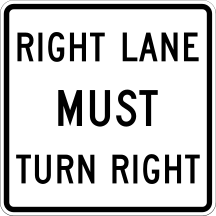
What does this sign mean?
Turning right is banned from this lane Slower traffic should keep to the right Traffic in the right lane must turn right Show the answer
Traffic in the right lane must turn right
If you do not want to turn, move out of that lane when it is safe.
Source: Manual on Uniform Traffic Control Devices, 11th Edition, Section 2B.28
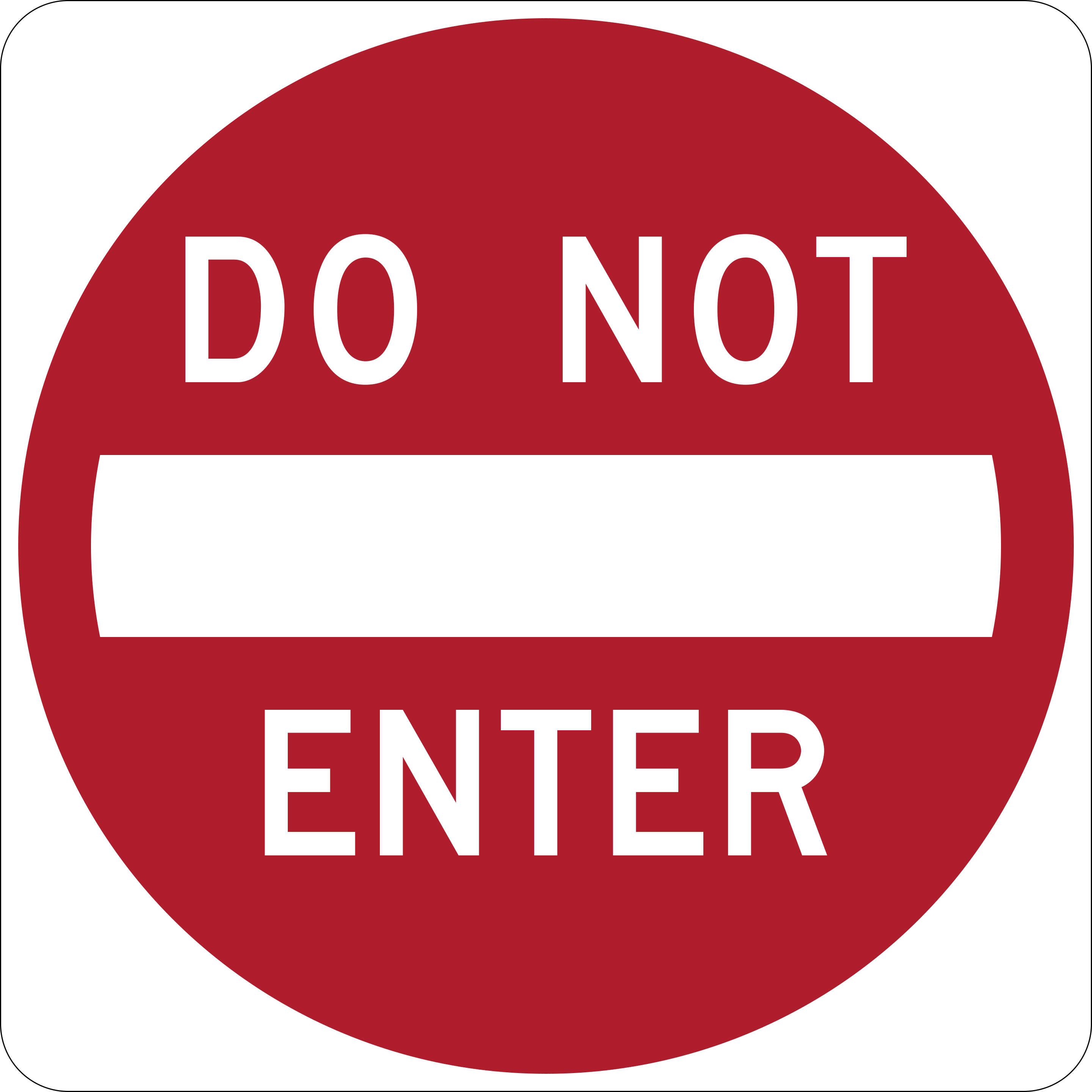
What does this sign mean?
Stop, then enter when the way is clear One-way traffic is coming toward you ahead You must not enter this road from here Show the answer
You must not enter this road from here
The sign marks a road or ramp you may not enter from your direction. Find another way.
Source: Manual on Uniform Traffic Control Devices, 11th Edition, Section 2B.46 ; Arizona Driver License Manual and Customer Service Guide, Section 3, Roadway and Vehicle Knowledge: Regulatory Signs (p. 41) ; Tennessee Comprehensive Driver License Manual, Section B, Chapter 3, Traffic Signs and Signals: Regulatory Signs (p. 37)
Take this topic's test
More Texas practice
Full practice test All topics, as in the knowledge test Right-of-Way Who goes first at intersections, crosswalks and roundabouts Traffic Signals Lights, arrows and pedestrian signals Lanes & Turns Lane markings, turns, passing and merging Speed Limits Limits and how to adjust your speed Parking Curb colors, hills and where you can't park Safe Driving Following distance, weather, night driving and sharing the road Alcohol & Drugs Blood alcohol limits, DUI rules and medication Emergencies Breakdowns, emergency vehicles and railroad crossings License Rules Permits, restrictions for new drivers and points Insurance & Collisions Required coverage and what to do after a crash Phones & Distraction Phone rules and other distractions
Share this test
Copy link
Email
About these questions
We wrote these practice questions from the facts in the Texas Driver Handbook (DL-7) (Revised January 2026 edition) and from official sources on road signs. Every answer links to its source, so you can check it and read more.
DMV Decoded is an independent guide, not a government agency. This practice test is not connected to the Texas Department of Public Safety, and your actual test will have different questions. Study the handbook, and check the agency's website for current rules.